Kitchen Knife
The kitchen knife that Wendy Torrance takes from the Overlook Hotel's kitchen begins as an ordinary tool of meal preparation and ends as the instrument that saves her life and her son's. Its trajectory through the novel traces the collapse of domestic order into primal violence, and the knife itself becomes a material witness to the moment when a wife and mother must kill to protect her child.
Identity and Origin
The knife is one of several long, sharp blades that hang from magnetized strips in the Overlook's vast kitchen. Wendy first notices them during Dick Hallorann's tour on closing day, when he shows her the array of cutting instruments that range from paring knives to two-handed cleavers. The kitchen, which Hallorann keeps spotless and which Wendy later maintains as a "safe place," is the domain of orderly domestic labor. The knives belong to that world of cooking and cleaning, not to violence. Yet when Wendy retrieves the longest and sharpest of them, wraps it in a dish towel, and carries it to her bedroom, she is already crossing the line from homemaker to defender. She hides the wrapped knife under the bed, keeping her hand close to it through a night of fitful sleep, aware that her husband may become a threat.
The Stabbing
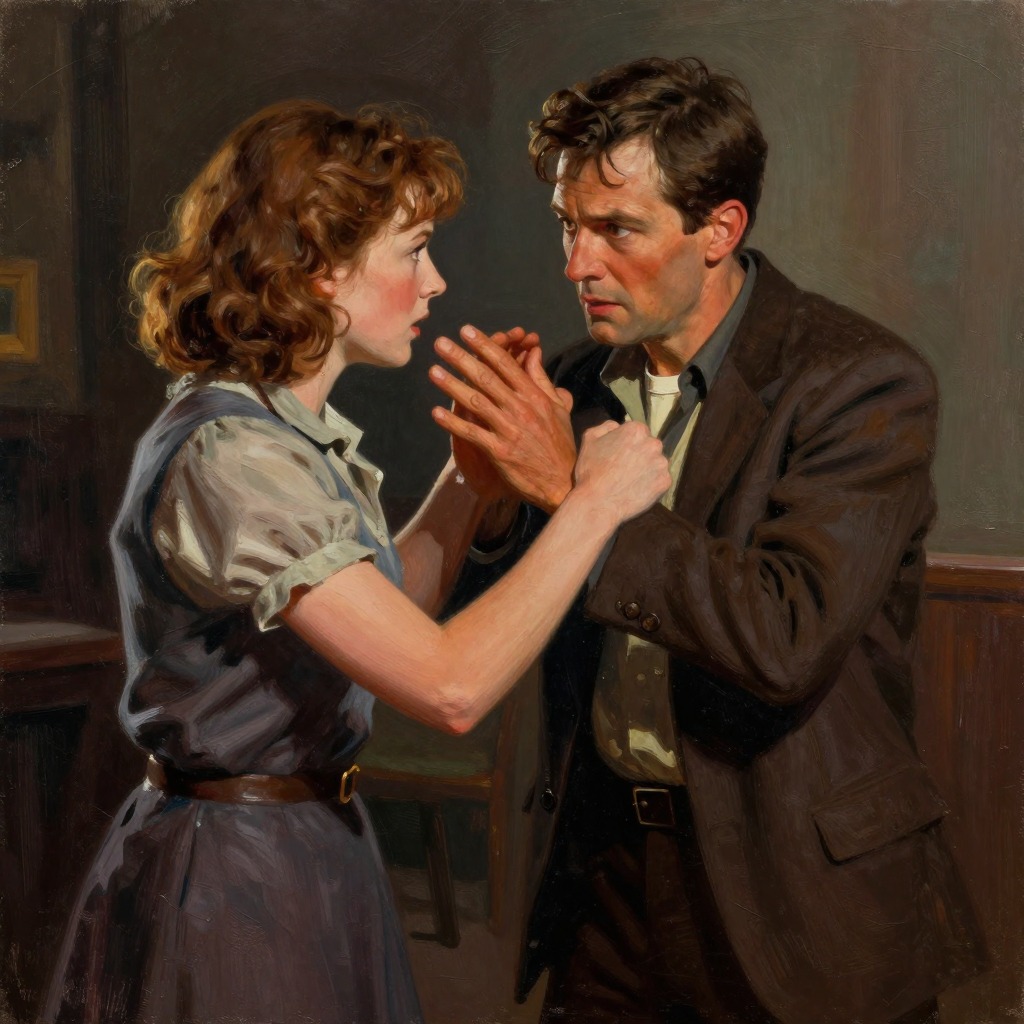
The knife's decisive use comes in the lobby, after Jack Torrance has beaten Wendy with a roque mallet, breaking her ribs and bloodying her ear. She has already stabbed him once in the lower back, driving the blade up to the handle, but he has pulled himself upright and continues to pursue her up the stairs, the mallet still in his hand. When he corners her in the bedroom and begins smashing through the bathroom door, Wendy retrieves a razor blade from the medicine cabinet and slashes at his hand. But it is the kitchen knife, still in her possession, that she has already used to deliver the wound that finally stops him. The stabbing is not a calculated act but a desperate reflex: she leaps onto his back as he reaches for the mallet, and buries the knife in his lower back. The blade, designed for carving roasts and chopping vegetables, now pierces flesh and bone, and Jack's blood soaks the red-and-black-checked flannel of his shirt.
Consequences and Aftermath
The knife wound does not kill Jack immediately. He continues to pursue Wendy and Danny through the hotel, the handle still protruding from his back, his strength fueled by the Overlook's malevolent influence. But the stabbing marks the point of no return: Wendy has crossed from victim to assailant, and the domestic object has become a weapon of last resort. After the Overlook's boiler explosion destroys the hotel, the knife is left behind in the ruins, along with the rest of the physical evidence of the Torrances' ordeal. Its role in the story is complete: it has served its purpose as the tool that breaks the cycle of violence, even as it implicates Wendy in an act she never imagined herself capable of committing.
Thematic Significance
The kitchen knife embodies the novel's central tension between the domestic and the monstrous. It is an object of everyday life, associated with cooking, nourishment, and maternal care, that is repurposed for survival and killing. Wendy's use of the knife mirrors Jack's use of the roque mallet: both are tools meant for harmless activities that become instruments of murder. But where Jack's mallet represents the perversion of leisure and play into violence, Wendy's knife represents the perversion of nurture and care into self-defense. The knife also carries the weight of Wendy's transformation from a woman who has never been "tried in fire" into someone capable of killing to protect her son. When she later tells Hallorann that she stabbed Jack, there is no triumph in her voice, only the flat acknowledgment of what necessity demanded. The knife, left behind in the burning hotel, is the object that made that transformation possible and that she must leave behind to move forward.